
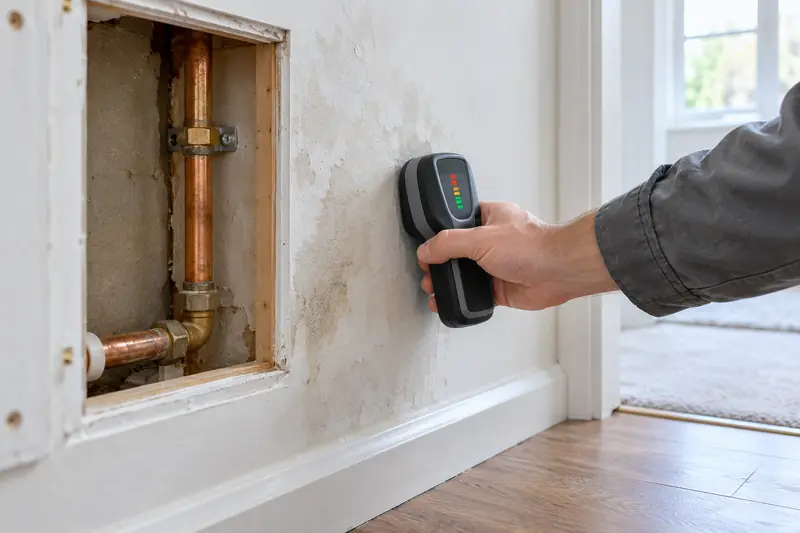
Start with the source of the water
A rising water bill and a damp ceiling can require different investigations. The bill may reflect water moving through the meter, while the ceiling could involve a drain, rain entry, or condensation. A useful assessment separates these possibilities before choosing equipment or opening a surface.
Explain what changed, where it appeared, and whether it follows water use or rainfall. If a leaking fixture is already visible, a repair assessment may be the more direct next step. A broader detection visit is useful when the evidence points to concealed water loss or several possible sources.
Signs worth documenting
Record observations without treating any single symptom as proof. Changes in occupancy, irrigation schedules, billing periods, or appliance use can explain increased consumption. Equally, a concealed supply leak may leave no visible puddle. Compare the timing of each observation with normal household activity.
- Water use increases without an understood change in household habits or equipment schedules.
- A meter records flow during a period when all known water uses are inactive.
- Paint, flooring, or cabinets show recurring dampness, staining, swelling, or deterioration.
- Water sounds continue after fixtures and appliances have stopped operating.
- A yard area remains wet when nearby ground has dried, or moisture returns after cleanup.
Possible causes and competing explanations
EPA guidance identifies aging piping, worn fixtures, corrosion, irregular pressure, installation problems, and equipment malfunctions among possible leak causes. This list is a starting point, not a diagnosis of a particular property. The affected component must be identified before its failure can be explained.
A toilet can lose water into the bowl without wetting the floor. An appliance or irrigation system can use water automatically. Moisture can also arrive from outside the plumbing system. Ask the provider to identify which explanations the observations support and which remain unresolved, especially when water consumption and dampness appear unrelated.
A staged diagnostic process
The investigation should begin with your history, accessible fixtures, and the layout of the property. Recent repairs, additions, shared meters, irrigation branches, and water treatment equipment help define what is connected. Visible checks may identify an ordinary fixture problem before concealed piping needs investigation.
The next stage is to establish whether unexplained flow persists and which system is involved. An independent provider may isolate suitable branches, examine moisture patterns, or select tests for the suspected pipe. Each step should answer a specific question rather than simply add another instrument reading.
Ask for a conclusion that distinguishes confirmed findings, a suspected area, and untested possibilities. If the visit does not locate a source, the report should explain what was checked and what evidence would justify another visit. An inconclusive assessment can still guide the next investigation when its limits are clear.
How detection methods compare
Equipment choice depends on the question being investigated. Compare what each proposed method can establish, the accessible test points it needs, and how the result will be confirmed. The inspection scope should describe the relevant approach rather than promise that one tool resolves every type of concealed water loss.
| Approach | Useful question | Important limit |
|---|---|---|
| Meter observation | Is water passing through this meter during a quiet period? | Does not locate the source or distinguish a leak from an overlooked water use. |
| Fixture checks and branch isolation | Which accessible component or connected area needs further investigation? | Depends on the actual connections and whether valves isolate the intended area. |
| Moisture assessment | Where do accessible materials show evidence of dampness? | Damp materials alone do not identify the original source. |
| Thermal imaging | Is there a surface temperature pattern worth checking? | FLIR explains that thermal cameras detect temperature differences, not water through walls. |
| Acoustic investigation | Is there a repeatable sound consistent with a pressurized pipe leak? | Requires a usable signal and interpretation in the context of the piping. |
| Drain camera inspection | What is visible inside an accessible drain? | A drain inspection does not test the separate pressurized water supply. |
Prepare without changing the evidence
Gather recent bills, photographs, leak alerts, and a short timeline. Compare consumption units and billing dates rather than only the amount charged. Note whether the property shares a meter and whether automatic equipment could have operated during a suspected quiet period.
EPA recommends comparing meter readings across a two-hour period with no water use. If access is safe and permitted, this can provide useful background. Do not postpone action on an active damaging leak to complete that observation. Tell the provider if you have already shut off water or changed a controller schedule.
- Clear access to visible shutoffs, cabinets, and affected rooms without removing building materials.
- List irrigation, ice makers, treatment equipment, and other automatic water uses.
- Arrange owner or manager permission for access and any proposed testing.
- Keep original photographs of intermittent moisture even if the surface is dry at the visit.
What affects the assessment cost
The scope depends on the number of possible systems, property layout, accessibility, and whether symptoms can be reproduced. A visible fixture inspection differs from tracing an unknown concealed line. Shared plumbing, inaccessible valves, or separate outdoor systems can require additional investigation.
Request written terms covering the inspection area, methods, documentation, and approval process for added work. Clarify whether a return visit, selective opening, repair assessment, or drying evaluation carries a separate charge. Compare providers on the questions their proposed visit will answer, not just a general description of leak detection.
Detection, repair, and verification are separate steps
Detection establishes evidence and, when conditions allow, a location for further action. Repair changes the failed component. Drying and restoration address affected materials. Confirm who is responsible for each step and whether the independent provider offers the additional work you need.
An assessment cannot guarantee that every concealed leak will appear during one visit. After repair, ask what check will verify the addressed problem and what follow-up is appropriate if consumption or moisture remains abnormal. Call Hydriva with your water-use history and symptoms to discuss the inspection needed at your property.
If a flow monitor has already recorded an alert, save the original event with its start time, duration, and any actions taken. Note whether water use stopped because a device closed a valve, someone changed an operating schedule, or the observed demand ended on its own. Those are different events. A screenshot showing only a warning label may omit the information needed to understand what happened. Share the record without presenting the alert as a confirmed location finding.
After the addressed problem is repaired, choose a comparison period with reasonably similar occupancy and equipment operation. Keep a brief record of changes instead of comparing unrelated bill totals. If unexplained use persists, provide the previous findings and identify what has changed since that visit. Ask whether the next inquiry concerns the repaired section, another branch, an ordinary fixture, or a measurement question. This makes follow-up more focused while avoiding a blanket claim that one successful repair establishes the condition of the whole property.
Inspection notes
When comparing the findings with a repair proposal, use the guide to reading a leak detection report to separate tested boundaries, suspected locations, and confirmed defects.
Water Leak Detection questions
What affects the cost of a water-leak inspection?
The number of suspected systems, accessible test points, property layout, and need for repeat observations affect the investigation. Ask whether documentation, further testing, access work, and repair are included or separately authorized. Call with your symptoms and property details to discuss a defined inspection scope.
Can I arrange water-leak detection for my city?
Provide the full address and state, supplier on the bill, and a short water-use history. Shared meters and separate outdoor branches can affect the visit. Call to discuss the appropriate starting inspection and confirm address-specific availability; a city name alone does not define the work needed.
Does a higher water bill prove that I have a hidden leak?
No. Compare measured consumption, the number of billing days, and any known change in water use. Irrigation changes, visitors, appliance activity, or a billing adjustment can affect the bill. A quiet-period meter observation can help determine whether unexplained flow continues, but it does not locate a leak. Share both the consumption history and any physical symptoms so the provider can decide whether a broad assessment or a more specific service fits.
Can a provider find a leak without opening walls or floors?
Sometimes, but the outcome depends on access, pipe layout, and the available evidence. Surface observations and suitable tests may narrow the search before an opening is considered. Ask what finding would justify an opening, where it would be made, and who would restore the surface. A description such as noninvasive detection should not be interpreted as a promise that the entire diagnosis and repair will involve no disturbance.
What if the wet area dries before the appointment?
Keep dated photographs and notes about what happened before the moisture appeared. Include fixture use, appliance cycles, and rainfall if relevant. A dry surface at the appointment does not explain the earlier event or prove the source has stopped. The provider may need a controlled attempt to reproduce the symptom or a different observation period. Ask how intermittent problems are handled and whether further visits would require separate authorization.
Should I shut off the water before a detection visit?
If an active leak is causing damage, use a known accessible shutoff only when you can do so safely, and tell the provider what you closed. Do not leave damaging flow running to preserve test conditions. Keep away from water near electrical equipment or unstable materials. For a suspected small leak without active damage, request instructions from the attending provider because some observations require the system to be in a particular operating condition.
What should I receive from a water-leak investigation?
Ask for the system and areas tested, relevant observations, the evidence supporting the conclusion, and any limits. The report should distinguish a confirmed defect from a suspect area and explain the recommended next step. Keep the repair scope separate if it follows. Call with your symptoms and available records to discuss the kind of water-leak inspection you need.
Related inspection guides
Compare other leak detection services from Hydriva, or find your city and state in the location directory.