
Start with the leak pattern
A ceiling stain marks where water becomes visible, which may differ from the roof opening above it. Water can travel along framing or a roof deck before reaching an interior low point. GAF's roof investigation guidance specifically describes this movement in metal deck assemblies. The investigation should connect the indoor evidence to a plausible outdoor entry point.
Tell the provider whether staining follows every rainfall, only wind-driven rain, or dry weather. A roof investigation focuses on the weather barrier, flashing and associated details. If the timing instead suggests a plumbing fixture or air-conditioning condensate problem, that information can change which trade and tests are appropriate.
Symptoms worth documenting safely
Brown ceiling marks, peeling paint and damp attic materials can justify an investigation, but they do not identify the failed component. Record when each sign appears and whether it grows, dries or returns. Keep photographs dated so a provider can compare the same location over time.
Stay away from sagging ceilings, water near electrical equipment and unstable or wet access routes. Do not climb onto the roof or enter a cramped attic to collect evidence. Move belongings only when the surrounding area is safe; a photograph from the room below may be enough for the initial discussion.
- A stain or drip that returns after rain near a chimney, skylight or exterior wall.
- Dampness around an attic penetration or visible discoloration on accessible framing.
- Peeling finishes at the ceiling edge, eaves or upper wall.
- A recurring wet area after a previous patch, especially when its boundaries change.
Possible entry points and look-alike problems
GAF identifies damaged roofing, deteriorated flashing and blocked gutters as possible roof leak causes. On low-slope roofs, its investigation guidance also directs attention to drains, scuppers, seams, parapet details and roof-mounted equipment. A visible gap deserves inspection, but finding a gap alone does not establish that it caused a particular indoor stain.
Moisture can also come from condensation within a poorly insulated assembly or from another building system. Ask the provider to explain why the proposed source fits the timing and water path. For a recurring leak, an account of previous unsuccessful repairs is especially useful: it helps frame what still needs investigation rather than simply repeating the same patch.
How a roof investigation can proceed
Begin by agreeing on the area of concern and the desired deliverable. A provider may review the leak history, inspect accessible indoor evidence and examine the corresponding roof details. The choice of further testing should follow the roof construction and findings, rather than a fixed equipment package for every property.
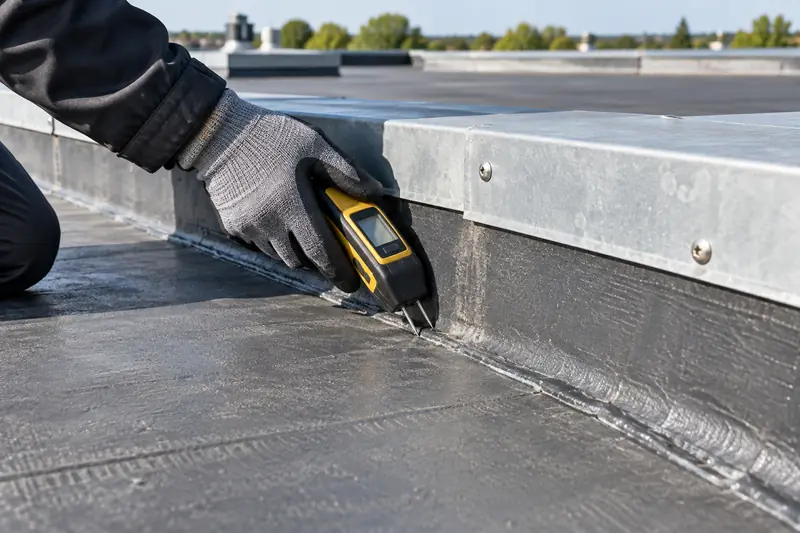
Where visual evidence is insufficient, the provider may propose moisture measurements, thermal imaging, a controlled water test or a compatible membrane test. Ask what question each test will answer and what would count as confirmation. Obtain separate authorization for opening finishes, taking roof cores or lifting materials, including an explanation of how the opening will be closed.
At the end, request photographs, the suspected entry location, supporting observations and any inaccessible areas. A useful finding distinguishes confirmed water entry from an untested possibility. If weather conditions prevented confirmation, ask what follow-up evidence or test would resolve the uncertainty.
Compare roof detection methods
These methods answer different questions. FLIR explains that thermal cameras detect surface temperature patterns rather than seeing water through walls. Buckleys describes electronic testing for compatible non-conductive membranes. Neither method should be presented as a universal scan for every roof covering.
| Method | Useful question | Important limit |
|---|---|---|
| Visual detail inspection | Is there visible damage at an accessible roof detail? | A visible defect may need additional evidence to connect it to the indoor leak. |
| Moisture measurement | Which accessible materials show evidence of moisture? | Moisture location does not by itself identify the entry opening. |
| Thermal imaging | Where do surface temperatures suggest further moisture checks? | Temperature contrast and roof construction affect results; suspect patterns need verification. |
| Controlled water testing | Can wetting a selected detail reproduce the observed leak? | The provider must assess safety and prevent unnecessary water damage. |
| Electronic membrane testing | Is there an electrical path through a compatible waterproofing defect? | Membrane conductivity, assembly details and access determine suitability. |
What an infrared roof survey can establish
A published municipal roof survey illustrates using temperature differences to map suspected wet insulation, then checking those areas with core cuts or a roof moisture meter. This is an example of verification, not evidence that any particular home needs the same procedure or has the same roof assembly.
For your property, ask whether the proposal is a broad moisture survey or an investigation of a particular leak. Those are different deliverables. A map of wet areas can help plan further work, but the report should also explain whether it identifies an entry point, and which conclusions remain provisional.
Prepare for the inspection
Gather available roof installation records, warranties, prior repair invoices and photographs. Tell the provider about rooftop equipment, solar panels, additions and areas that cannot be accessed. If you rent, obtain the property manager's authorization before scheduling work that could affect the roof or interior finishes.
Ask whether the visit needs indoor access and whether the proposed test depends on dry weather, recent rain or a suitable thermal survey window. Keep the affected room accessible when safe. Avoid coating or repainting the stain before it is documented, and discuss temporary protection separately from the investigation.
What affects the cost and scope
Factors to discuss include roof size and height, slope, safe access, the number of leak areas, concealed layers and the need for additional testing. An accessible flashing investigation and a large low-slope moisture survey involve different work. Request a written scope that names the roof areas, proposed methods and report format.
Ask whether the charge includes a return visit, controlled testing, opening and closing materials, temporary protection or only diagnosis. Identify any authorization threshold for added work. Compare proposals by the questions they will resolve, not simply by the number of tools listed. Repair and interior restoration should be identified separately.
Detection, repair and follow-up decisions
Detection supplies evidence for a repair decision; it does not itself repair flashing, replace wet materials or establish a roof's remaining service life. Ask a repair provider to explain whether a local repair addresses the documented cause and whether other conditions require broader assessment. A leak alone is insufficient grounds for choosing replacement without considering the assembly's condition.
Before closing the job, agree on how the repaired area will be checked and who handles remaining indoor moisture or damaged finishes. Keep the findings and repair record together. Call Hydriva with the roof type, affected room, and rainfall pattern to discuss the appropriate roof-leak inspection and access arrangements.
For a managed building, identify the person who holds roof access information and any existing warranty or maintenance records. Ask the inspecting provider to describe the proposed access and investigation before another contractor alters the assembly. Do not assume that an indoor stain authorizes a particular opening on the roof. Keep the affected room location, observations during weather events, and roof-level findings on the same record. Where those locations do not align, ask how the proposed explanation accounts for the difference. The aim is a documented connection between the evidence and the repair scope, not simply a patch above the most visible mark.
Inspection notes
Roof Leak Detection questions
What affects the cost of a roof-leak inspection?
Roof type, safe access, the number of affected areas, and whether a repeat observation or selective opening is needed affect the scope. Clarify the separation between investigation, roof repair, and indoor restoration. Call with the roof type and leak timing to discuss a suitable assessment.
What should I provide when calling about a roof leak in my city?
Give the full address and state, the affected room, and whether water appears during or after rainfall. Mention restricted roof access, earlier patches, and any management arrangements. Call to discuss the investigation and confirm availability without climbing onto the roof to collect additional information.
Can a provider investigate a roof leak when it is not raining?
Yes, a dry-weather visit can document roof details and existing interior evidence. GAF's investigation guidance includes looking for residue that marks previous ponding and considering controlled wetting when the source remains unclear. Whether a test is appropriate depends on the assembly and site conditions. Describe the rain pattern in advance and ask whether the proposed visit can confirm the source or only narrow the search.
Does a thermal camera show the exact hole in the roof?
A thermal image shows surface temperature differences. Some patterns can suggest moisture, but they do not automatically identify a hole or prove the source of water. Ask how suspect areas will be checked and whether the report provides a moisture map, an entry-point finding or both. The local City Hall survey illustrates confirmation with additional measurements rather than relying on the image alone.
Why does the ceiling leak away from the damaged roof detail?
Water can follow a route within the assembly before it reaches the room. Deck geometry, framing and layered materials can make the visible drip a poor guide to the entry point. The provider should explain the likely route and the evidence supporting it. Share a room sketch and dated photographs, but do not open the ceiling or move attic insulation yourself to trace water.
Will roof leak detection require removing shingles or cutting the ceiling?
Some investigations use accessible observations and measurements; others need limited openings to answer a specific question. Confirm this before authorizing the visit. Ask where an opening is proposed, why it is needed, who will restore it and whether warranty conditions affect the work. No single inspection method can justify a blanket promise of finding every roof leak without disturbing any materials.
What should I ask after an earlier roof patch failed?
Request an explanation that connects the original symptom, the previous repair and the present evidence. Ask whether the current proposal tests the earlier diagnosis, considers another entry point and includes a way to verify the eventual repair. Supply the previous invoice if available. A new coat of sealant should not substitute for a clear account of the water path and the failed detail.
Related inspection guides
Compare other leak detection services from Hydriva, or find your city and state in the location directory.
Sources and further reading
- GAF: Common roof leak causes and signs
- GAF: Roof-specific leak investigation in its liquid-applied roofing manual
- FLIR: Water leak investigation with thermal imaging
- Buckleys: Electronic membrane leak detection principles and compatibility
- City of El Monte: City Hall roof diagnostic survey and moisture verification