Lake Stevens neighborhoods and local areas
- West Lake Stevens (Frontier Village)The municipal beautification plan identifies West Lake Stevens with the Frontier Village name.
- Old Town (Downtown City Center)The city plan identifies Old Town and Downtown City Center as the same center.
- East Lake StevensEast Lake Stevens is one of the centers named in the city plan.
- South Lake Stevens (Cavalero)The plan identifies South Lake Stevens with the Cavalero name.
These names describe places; they do not establish utility responsibility, pipe condition, or appointment availability. Follow the local references in the city and state directory for the type of area and supporting source.
Start with the right Lake Stevens water system
Lake Stevens' public information distinguishes drinking water, sanitary sewer, and stormwater. Snohomish County PUD provides water information for the Greater Lake Stevens area, while the city manages its stormwater program and identifies Lake Stevens Sewer District for sewer service. Verify the actual account and installation before deciding whom to contact about a specific property.
A drinking-water use record can support a private supply question. A drainage report concerns runoff and surface-water facilities. A sewer problem involves wastewater collection or private drain piping. Explain what you observed instead of using 'water leak' for all three, because the first inspection and the responsible contact may be different.
Provide the full street address and unit, not just a nearby landmark or postal city. Identify the supplier on the bill and whether the record covers one residence, several units, or a shared installation. Ask who can authorize testing and interruptions. The name of a district or planning area does not define your private line arrangement.
Use meter history as a timeline, not an exact location
Snohomish PUD's public meter guidance describes usage information in MySnoPUD and explains how to match a meter identifier with the bill where multiple meters are present. If you have legitimate access to the relevant account, preserve the available interval history around the concern. Do not share account passwords with someone arranging an inspection.
Note the date range, units, and events you can account for. A refill, an appliance cycle, irrigation, guests, or work at the property can change demand. Where records show use at an unexpected time, tell the provider what was known to be operating and what remained unknown. An interval is a useful clue, not proof of a particular failed fitting.
A monitoring alert and an on-site finding serve different purposes. EPA guidance distinguishes devices responding to moisture from those tracking flow. Identify which type produced the notification before calling. Ask what evidence will connect that notification with the proposed test, especially if the concern ended before the appointment or the device covers only one small area.
Use local center names without assuming the building layout
Municipal planning references group West Lake Stevens with Frontier Village, Old Town with Downtown City Center, and South Lake Stevens with Cavalero; East Lake Stevens is another named center. These aliases help explain the general location. They are planning-area names, not separate lists of contractor offices or evidence that neighboring buildings have identical plumbing.
For a property near Frontier Village or Old Town, give the actual building and unit identifier as well as the familiar area name. Explain the symptom's floor and room, the entry point for attendance, and who manages any shared space. For an East Lake Stevens or Cavalero address, provide the same concrete details rather than relying on an area label to communicate access.
Do not infer age, pipe material, foundation type, or repair needs from the center alone. A building record or prior inspection is more useful than a neighborhood stereotype. If a manager supplies a drawing, clarify whether it shows the current installation or an earlier layout, and identify any part that has not been checked since alterations.
Specify the question before choosing inspection equipment
Ask for a starting scope that fits the evidence: unexplained supply use, moisture associated with a fixture, a recurring drain symptom, or weather-linked entry. The proposed assessment should explain which accessible areas are included and what finding would lead to another test. It should not rely on a claim that one instrument can resolve every kind of leak.
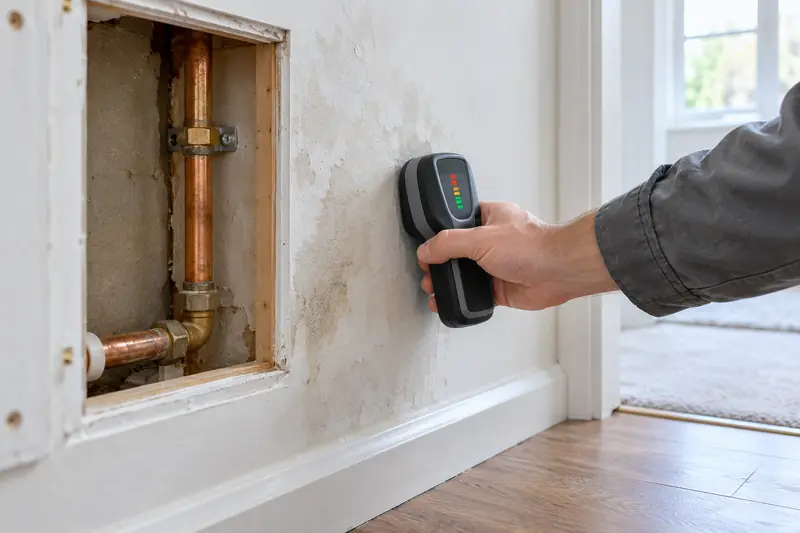
Thermal imaging can help identify surface temperature patterns for further assessment, but the image alone does not show a hidden pipe defect. Ask how the provider will distinguish an interesting pattern from evidence supporting the suspected source. If the plan involves an opening, establish the location, reason, and approval process before finishes are disturbed.
| What you have observed | Useful information to bring | Question for the visit |
|---|---|---|
| Unexpected use in account records | Relevant intervals and known operating events | Which connected system remains unexplained? |
| Wetness after a fixture runs | Fixture, room, timing, and earlier repairs | Which supply or drain component needs assessment? |
| Moisture following rainfall | Dated photographs and safe exterior observations | Is the scope plumbing, envelope, or drainage? |
| A reported sewer problem | Affected fixtures and any utility response | What private section or public-system question remains? |
Compare the deliverable, costs, and utility paperwork
Access, system type, test conditions, and the number of unresolved questions influence the proposed work. Ask whether the visit is an initial assessment or a specialized investigation of a defined section. Confirm the written findings you will receive and how additional stages are approved. Two appointments with the same service label may not include the same assessment or reporting.
Request a distinction between an observed symptom, a suspect location, and a confirmed component failure. The report should also identify conditions or inaccessible areas that limited the conclusion. Separate investigation, selective opening, repair, drying, and restoration before comparing totals. Ask whether another provider must handle the next stage and what evidence that person will need.
If Snohomish PUD supplies the property, ask it directly about any applicable bill-adjustment process. Its published policy has qualifying conditions; an unusual record does not automatically qualify. Preserve notification dates and repair evidence, and request the current requirements for the account. Neither a private inspection nor a lower later bill guarantees the utility's decision.
Verify the addressed problem and keep a useful follow-up record
Agree on what will verify the repaired component before closing the job. Keep the finding, correction, and verification together so the next person can distinguish work completed from questions still open. Where the original concern involved a shared installation, give the responsible manager the same record rather than relying on a verbal message passed between occupants.
Compare later usage under reasonably similar operation, and record any changes in occupancy, outdoor watering, or equipment schedules. For moisture, track the original surface and triggering event rather than treating a dry appearance on one day as proof of the source. If the symptom recurs, note whether its timing or location changed and which earlier findings still apply.
Call Hydriva with the Lake Stevens, Washington address, affected system, symptom history, and access contact. Mention the local center name if it helps identify the location, but include the full address. Discuss an inspection that answers the specific unresolved question and confirm availability, reporting, and attendance conditions before making arrangements.
Lake Stevens leak detection questions
Should I report drainage and drinking-water concerns to the same place?
Identify the system first. The city's public information separates stormwater from sewer service and PUD drinking water. Use the current official contact for the concern and check the actual property account. A private plumbing assessment does not replace a report about a public drainage facility or utility incident.
Does a MySnoPUD usage pattern locate the leak?
No. It can help describe when water was recorded, but it does not name the escaping component. Preserve the available history, known operation, and meter or account identifier. Ask how an on-site investigation will use that pattern and which connected sections it can assess.
Are Cavalero and South Lake Stevens separate appointment areas?
The municipal planning reference groups Cavalero with South Lake Stevens as a center name. Give the exact address when discussing an inspection; a planning alias does not confirm provider coverage, a utility boundary, or a building's pipe layout. Availability needs to be checked for the actual property.
What affects leak detection cost in Lake Stevens?
The system involved, usable access, operating restrictions, and whether the first finding requires further investigation affect the scope. Compare included tests and written reporting, then clarify separate opening, repair, and restoration work. Call with the symptom and property details rather than choosing from an undefined inspection label.
Can one visit prove that both the supply and drainage are sound?
Only the agreed and completed tests can support a finding. A supply investigation does not establish the condition of every drain, roof detail, or stormwater installation. Ask for the areas tested, limits, and remaining questions. A staged plan may be more useful than an unsupported all-clear for unrelated systems.
Choose a relevant service
Explore Hydriva Leak Detection or return to locations and neighborhoods.
Sources and further reading
- City of Lake Stevens: Drainage and stormwater management
- City of Lake Stevens: Public utility and drainage questions
- Snohomish County PUD: Water services
- Snohomish County PUD: Water meters and usage records
- Snohomish County PUD: Water-service terms and conditions
- City of Lake Stevens: Planning-center names and aliases
- EPA WaterSense: Leak detection and flow monitoring devices
- FLIR: Thermal imaging and water-leak investigation