
Brea neighborhoods and local areas
- BlackstoneBrea's housing element identifies the Blackstone community within a city census block group.
- Olinda RanchOlinda Ranch is identified as a residential community in the city's housing element.
- Olinda VillageThe city's housing element names Olinda Village within Brea's eastern area.
These names describe places; they do not establish utility responsibility, pipe condition, or appointment availability. Follow the local references in the city and state directory for the type of area and supporting source.
Choose between a utility inquiry and a property inspection
Brea's official Utility Services page separates account inquiries from leak detection and water-service troubleshooting. Utility Billing handles the account; Public Works is the city's listed contact for troubleshooting. The Water Division also lists maintenance of municipal water infrastructure among its responsibilities. This distinction is useful when you cannot yet tell whether a concern belongs with the utility or a private plumbing provider.
Describe the location of visible water without declaring who owns the pipe. Water beside a meter, at a curb, or near a property boundary does not by itself settle responsibility. Ask the city what assistance it can provide and what private work, if any, you should arrange afterward. Do not authorize an independent contractor to alter utility equipment on the assumption that everything near your property belongs to you.
For a concealed problem inside the building or on a confirmed private line, discuss a property inspection. Have any city visit notes ready so the next provider does not have to reconstruct the earlier conversation. Explain whether the utility identified a boundary, observed continuing use, or simply recommended further investigation. Those are different findings and should remain distinct in the record.
Read the water consumption before interpreting the bill total
Brea explains that its utility bill includes several services, including water, sewer and trash. A change in the total amount therefore deserves a closer look before it is described as evidence of a leak. Compare the water-consumption entries, billing dates and relevant charges. Utility Billing can explain the statement; a plumbing visit addresses the physical system rather than an unexplained account balance.
Make a short list of ordinary uses during the period: guests, outdoor watering changes, pool filling if applicable, or work involving water. Include the dates you know and leave uncertain dates marked as approximate. This is not an exercise in explaining away the problem. It helps an inspector distinguish a persistent concern from a one-time use that happened to appear on the same statement.
If you already recorded meter readings, retain the times and the conditions under which you observed them. Note whether any automatic water-using equipment might have operated. A reading without that context is easy to overinterpret. Ask the utility or provider for suitable instructions if further observation is needed; do not force a stuck cover, dismantle a meter or interfere with locked equipment.
Describe the symptom without prematurely naming a slab leak
A damp floor is a reason to investigate, but the first call should describe what you can see rather than commit to an underground diagnosis. Explain which room is affected, whether the surface is changing, and whether a nearby appliance or fixture was recently used. Mention previous plumbing work and any existing report. The appropriate inspection depends on the evidence and the building's actual arrangement.
Keep supply-water loss separate from moisture entering through the building or escaping from a drain. A consumption concern may call for water-leak investigation, while a stain associated with rainfall may require roof or building-envelope assessment. A symptom related to a particular fixture's discharge can require a different scope again. Ask the proposed provider which possibilities the appointment includes and which would need another specialist.
Do not repeatedly run a fixture to prove that it leaks if doing so adds water to an affected area. Photograph changes from a safe position and report the last known occurrence. Where water threatens electrical equipment, a ceiling appears unsafe, or another immediate hazard is present, prioritize appropriate emergency help rather than waiting for an ordinary detection visit.
Keep indoor and outdoor investigations connected
For a property with irrigation, tell the provider whether the concern occurs during scheduled watering or remains after the system is no longer running. Share the controller schedule if it is readily available. A wet planted area can be useful evidence, but its position alone does not identify the source or route of a buried pipe. Avoid digging simply because the surface looks wetter in one place.
If the property has a pool, distinguish a pool-level concern from unexplained consumption on the household supply. Describe refill arrangements and any recent maintenance without assuming the two concerns share a cause. Ask whether pool piping and equipment are within the proposed appointment. An inspection of domestic plumbing should not be treated as a full assessment of every water-containing system on the lot.
For shared landscaped spaces, ask the association or property manager which equipment serves the individual property and which serves common areas. This is a coordination question, not a claim about a particular Brea community's ownership arrangements. Obtain permission before arranging access to shared equipment, and identify who can approve an interruption if testing requires one.
Use the local area name to improve access details
The local-area references above include Blackstone, Olinda Ranch and Olinda Village from the city's housing-element material. Use a familiar community name alongside the complete Brea address when discussing access. The names help orient the conversation; they do not establish the age of a pipe, the construction of your home or the availability of an appointment.
A provider also needs details a neighborhood label cannot convey: unit number, entrance location, gate arrangements and the room or outside area where the concern was observed. If you manage several properties, label each photograph with the correct address before sharing it. Keep unrelated account details and residents' personal information out of images whenever possible.
Describe the building you actually have. An occupied shop, a detached residence and a shared residential building can require different access planning even within the same city. Explain business hours, tenant permissions or restricted spaces early. This helps establish whether the proposed visit can answer the question without an avoidable return appointment.
Agree on what a detection appointment will deliver
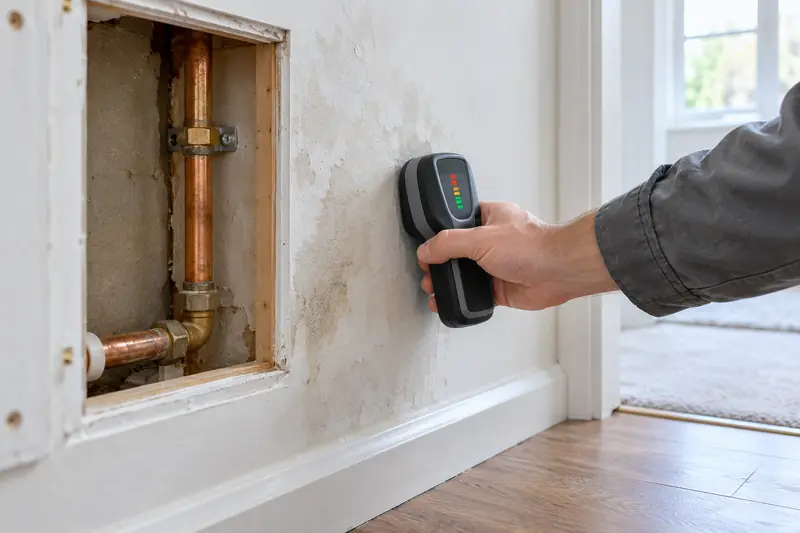
Ask for a written scope naming the system to be investigated and the intended result. Is the provider trying to establish whether unexplained water use remains, narrow a suspected route, locate a likely fault, or inspect an already exposed connection? These are related tasks, but they do not all require the same work or produce the same level of certainty.
Equipment names should come with an explanation of purpose and limits. Ask what the chosen method can show at your property and what conditions could prevent a useful result. If a finding will be described as a likely location rather than a confirmed defect, that distinction should appear in the report. Avoid interpreting a precise-looking mark as a guarantee about what lies beneath it.
Agree on an approval point before opening a wall, removing flooring or excavating. Clarify whether the detection provider performs the repair, whether another contractor may use the findings, and who restores the disturbed surface. Permission to investigate should have a clear boundary so unexpected access work becomes a decision you can review.
Compare costs by included work and unresolved questions
A meaningful price comparison starts with matching scopes. Ask about the areas included, access assumptions, written documentation and conditions that could add a charge. Explain whether previous testing was inconclusive and provide its findings. A new proposal should state what will be learned beyond the earlier visit rather than simply repeating an equipment list.
Keep investigation, repair and reinstatement costs separate enough to understand them. If the quote includes several stages, ask which findings would change the repair plan and when you would receive an updated price. There is no single price promised here for Brea properties; system complexity, access and the work actually requested affect the proposal.
Do not assume an inspection invoice qualifies for a water-bill adjustment or insurance payment. Ask the relevant organization about its process directly, retain dated records and avoid promising yourself a reimbursement before eligibility has been established. An independent provider can document work performed, but that document does not decide an account or coverage question.
Close the loop after a finding or repair
Request a record that another person can follow: the affected system, accessible areas checked, supporting observations, location references and unresolved limitations. Keep photographs with the written explanation. If access prevented assessment of a section, make sure that section is identified rather than absorbed into a broad statement that the property has no leaks.
After repair, ask what was corrected and how the repair provider checked the result. Retain that answer separately from the original detection report. Compare later observations with the original symptom and, where relevant, review subsequent consumption over comparable periods. A later change may require a fresh question rather than an assumption that the previous finding explains everything.
Call Hydriva at (844) 776-0313 with the Brea address, suspected system and any prior findings to discuss an appropriate next step. Hydriva connects homeowners with independent service providers. Confirm availability, scope and the contractor's applicable license and insurance before agreeing to work; the directory is not a municipal service or a guarantee of contractor performance.
Brea leak detection questions
Does the Brea Water Division replace a private plumbing inspection?
Not automatically. The city lists help with leak detection and water-service troubleshooting, but the appropriate next step depends on the concern and responsibility for the affected equipment. Ask what the city's assistance covers and provide any findings when arranging work on private plumbing.
Should I request slab testing for every unexplained water bill?
Explain the consumption change first. Share known fixture, appliance and outdoor-use information so the provider can propose a suitable investigation. The absence of visible water does not establish a slab leak, and the inspection should not begin with an unsupported repair assumption.
Can I arrange an inspection for a rental property?
Report the concern to the owner or manager and establish who may authorize the work. Explain access restrictions and which units are affected. Do not assume that permission to enter your unit includes permission to interrupt shared systems or open a finished surface.
Are the listed Brea communities a complete coverage promise?
No. They are selected sourced local references. Give the complete address when calling and confirm whether the required service and appointment are available. The provider must assess the individual property's needs regardless of its community name.
Choose a relevant service
Explore Hydriva Leak Detection or return to locations and neighborhoods.