
Hydriva
Leak Detection
Understand the warning signs. Find the right inspection for hidden water leaks, pool leaks, and building moisture.
Find your city or communityResidential, property management, and commercial inspection guidance.
Leak Detection Services
Different leaks need different tests. Start with the service that fits the system, the symptom, and the way the problem appears.
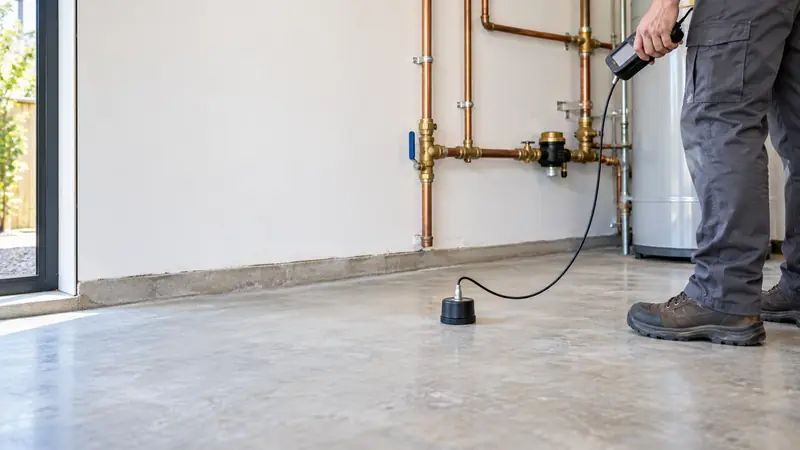
Water Leak Detection
Investigate unexplained water use or moisture when the source is uncertain, then identify the appropriate plumbing, slab, or underground assessment.
Explore this service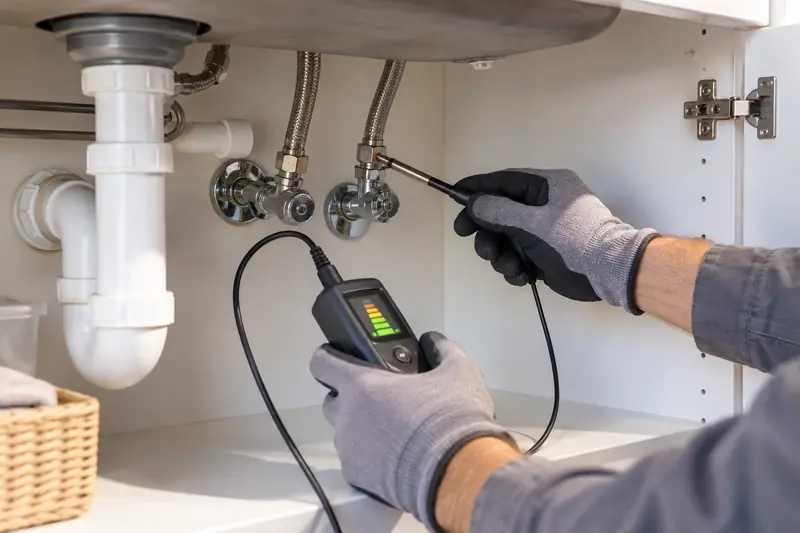
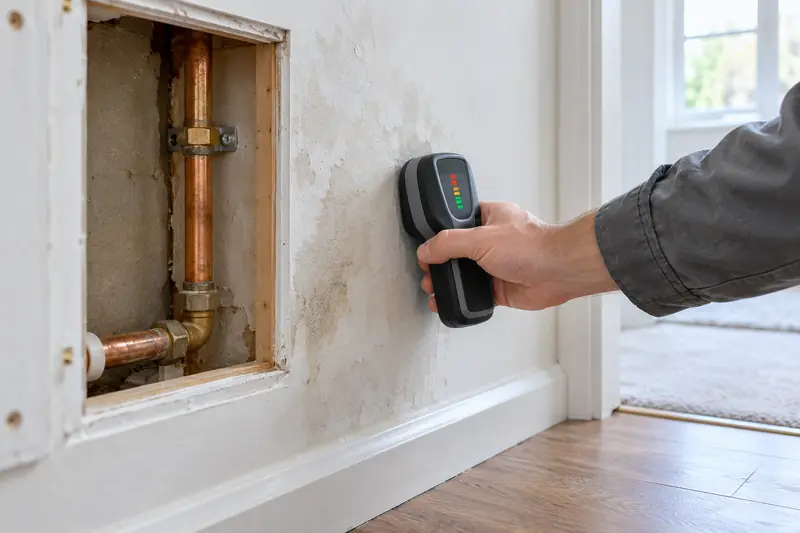
Plumbing Leak Detection
Separate indoor supply leaks from fixture, drain, and appliance problems using the timing and location of the moisture.
Explore this service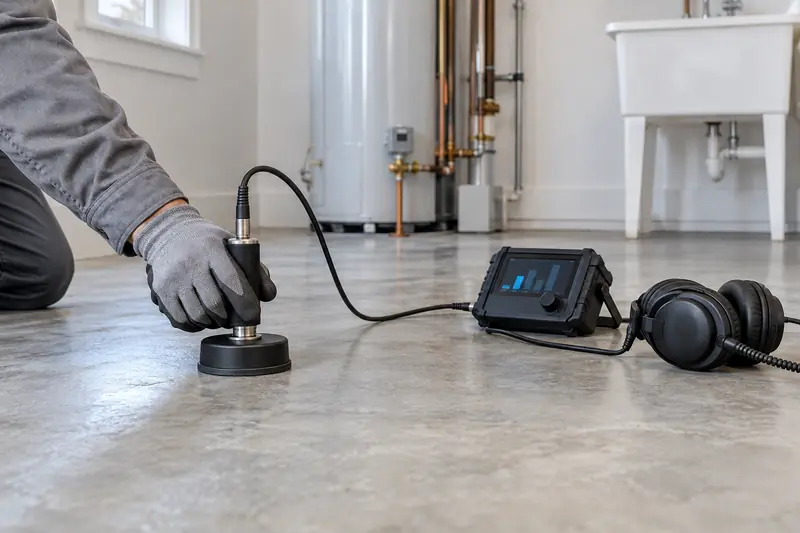
Slab Leak Detection
Investigate suspected piping leaks beneath concrete and understand the findings before authorizing floor access or discussing a reroute.
Explore this service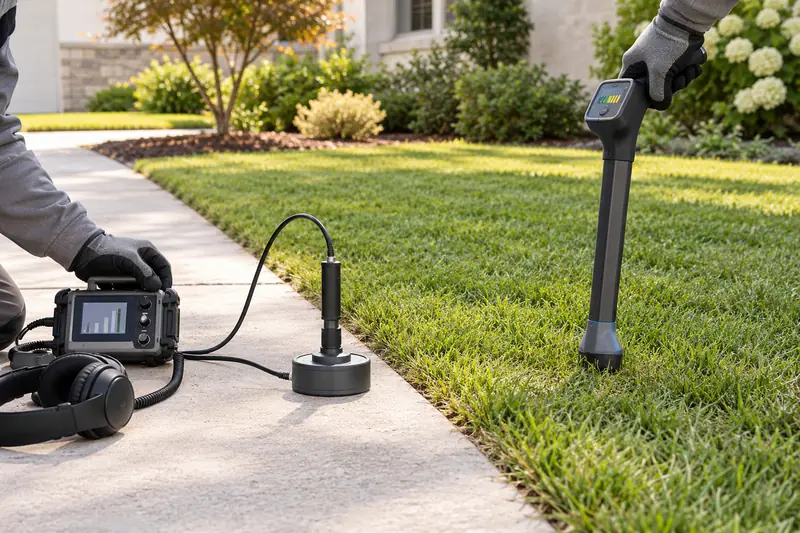
Underground Leak Detection
Investigate buried exterior lines and persistent wet ground, with attention to branch isolation, pipe routes, and excavation planning.
Explore this service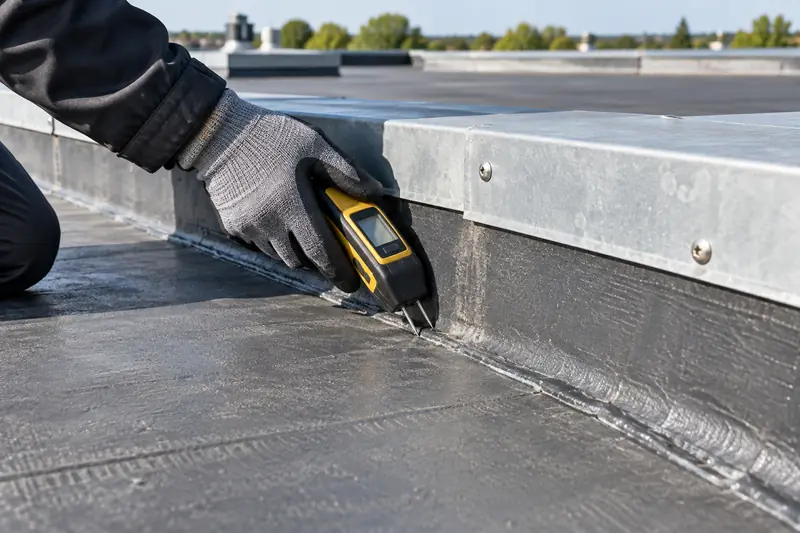
Roof Leak Detection
Trace rain-related ceiling stains and roof moisture with an investigation suited to the roof material, access and leak history.
Explore this service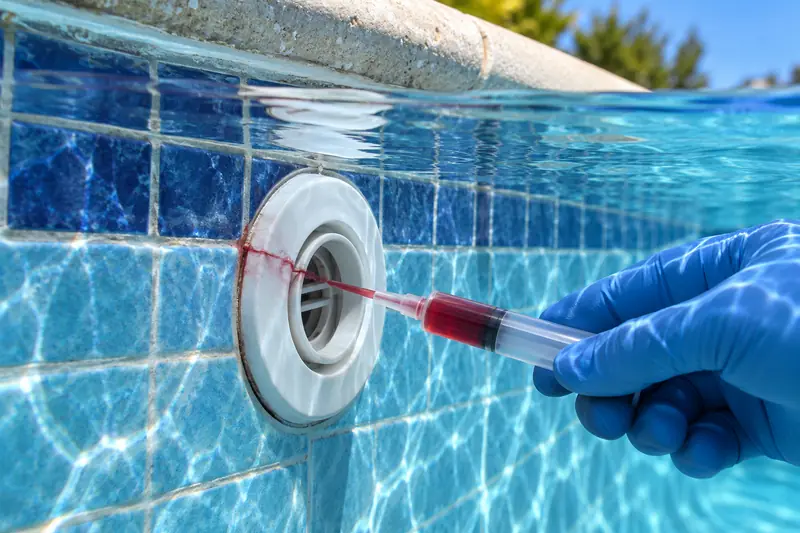
Pool Leak Detection
Investigate pool water loss with evaporation comparisons, circuit isolation and targeted checks of the shell, fittings and buried plumbing.
Explore this service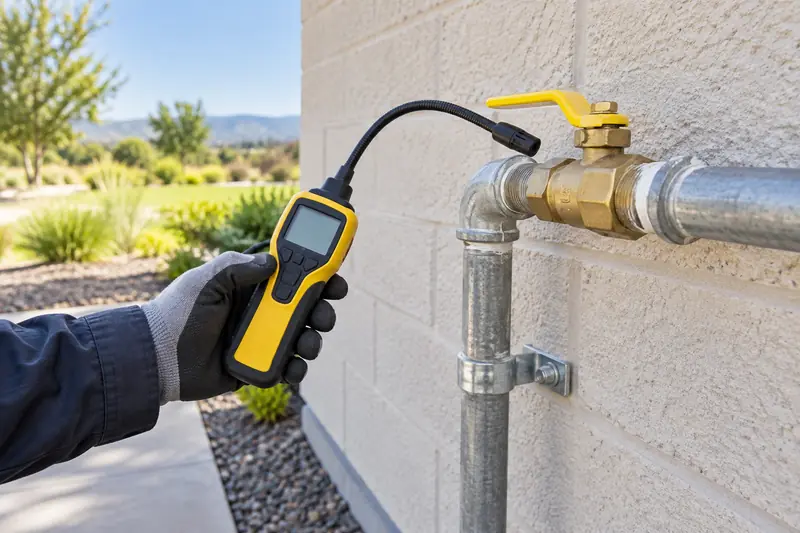
Gas Leak Detection
Suspect gas? Leave immediately and call the utility or 911 from safety. Arrange independent professional assessment after emergency instructions are satisfied.
Explore this service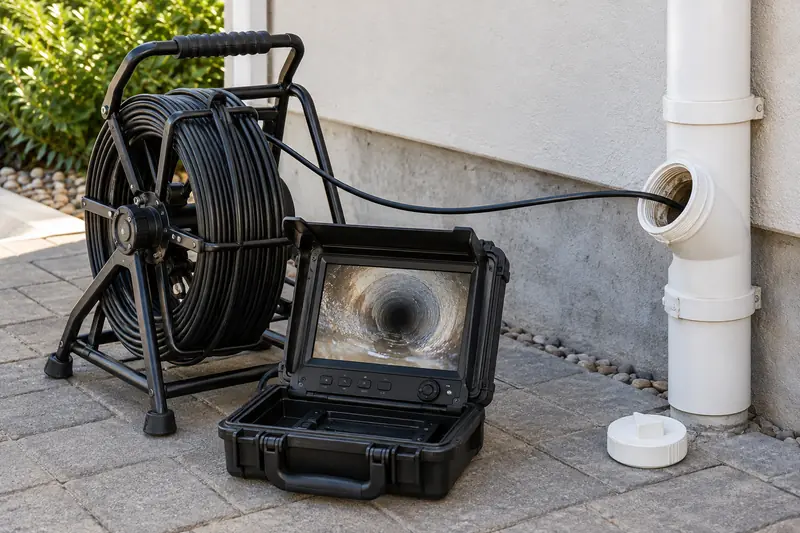
Sewer & Drain Leak Detection
Separate drain blockages, pipe defects and odor pathways with targeted wastewater investigations and clear limits on camera and location findings.
Explore this service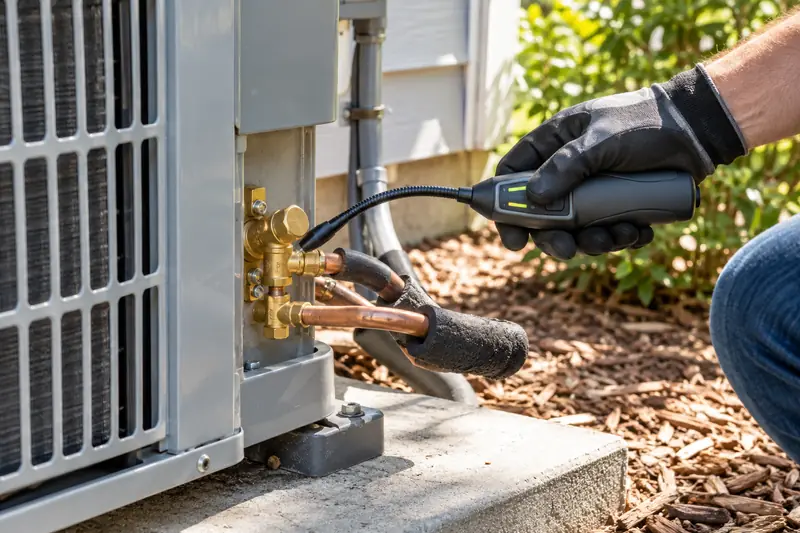
HVAC & Refrigerant Leak Detection
Separate suspected refrigerant loss from condensate drainage problems and understand the tests an independent HVAC provider may recommend.
Explore this service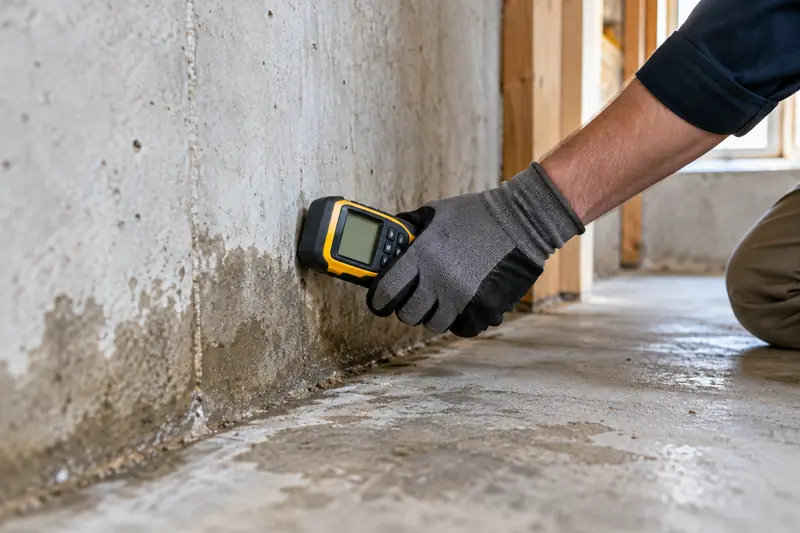
Basement & Foundation Leak Detection
Investigate basement dampness and foundation-edge water while distinguishing exterior entry, plumbing loss and condensation.
Explore this service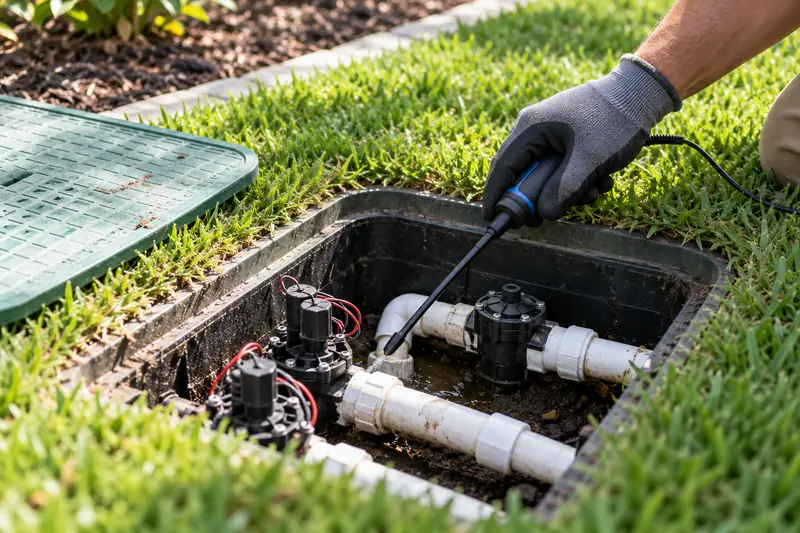
Irrigation & Sprinkler Leak Detection
Trace suspected irrigation loss by zone and distinguish buried pipe problems, valve leakage and sprinkler drainage.
Explore this service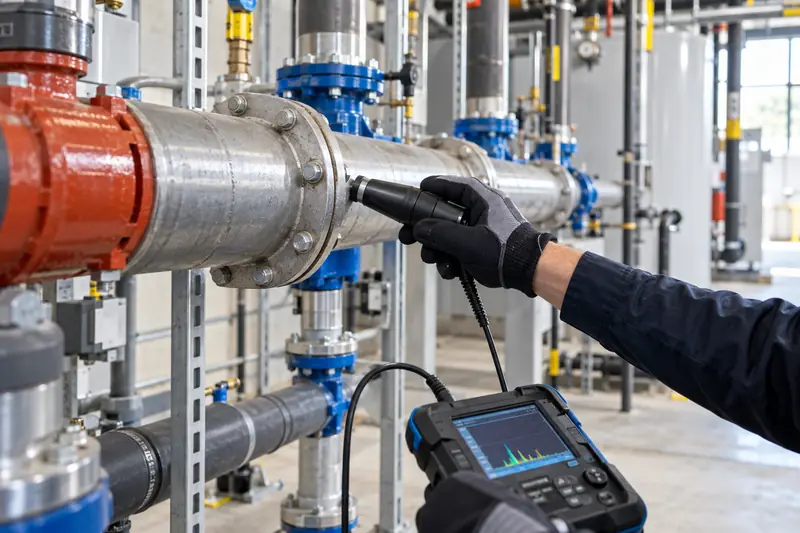
Commercial & Industrial Leak Detection
Scope facility water and utility-system leak investigations around operating records, access, isolation and repair verification.
Explore this serviceAI-generated photography illustrates inspection contexts and is not a record of completed customer work.
A useful inspection starts before the first test.
Hidden leaks can be confusing because water travels. A ceiling stain can appear away from a roof opening. Moisture near a floor can come from a pipe, drainage, condensation, or water entering from outside.
The first goal is to define a testable question. Describe what changed, when it happens, and which systems were operating. A clear description helps avoid testing an unrelated system or treating the visible stain as the source.
Describe the pattern
Note the location, timing, water use, rainfall, and any changes to the property. Record what you can observe safely.
Choose a testable scope
Establish whether the investigation concerns supply plumbing, drains, roofing, a pool, irrigation, refrigerant, or another system.
Review the findings
Ask how the result was confirmed, what remains uncertain, and what access or repair work is being proposed separately.
What have you noticed?
A change in water use, a damp surface, and a falling pool level point to different starting tests. Choose the closest observation to find a relevant guide.
This is general guidance. It cannot confirm a leak or identify its location.
The right inspection starts with the right address.
Give the city, state, ZIP code, and complete property address when discussing an inspection. Several places share a city name, and a postal label does not identify every utility or property boundary. Keep the location details separate from the symptom so that the inquiry can be considered for the correct address and system. A city appearing in the directory is not confirmation that an independent provider accepts every property there.
Identify the supplier from an actual utility bill and distinguish that account from an association, landlord, or building-management contact. A shared meter or common outdoor area can involve more than one responsible person. Explain which part of the property is affected and who can authorize access. Where the arrangement is uncertain, ask what information is needed before proposing a test or interrupting normal use.
Describe the required service in ordinary terms. A hidden water-supply concern, pool water loss, moisture after rainfall, and a refrigerant problem are not interchangeable bookings. If you cannot identify the system, explain the observation and its timing without assigning a diagnosis. Ask the provider to confirm whether its proposed investigation addresses that particular concern and which parts of the property fall outside the agreed scope.
For a managed site, identify a practical contact for entry and a separate authorization contact if needed. Ask how additional work will be proposed and approved when the first findings change the suspected cause. Give occupants clear arrangements through the owner or manager, and avoid sharing sensitive access information publicly. A usable access plan supports the visit without granting unrestricted permission to alter private or shared systems.
Call with the property location, observed problem, and relevant service records to discuss the inspection you need. Confirm the system, accessible areas, documentation, and arrangements for any additional work. A useful first conversation establishes a specific question for the visit, whether that concerns unexplained supply use, a recurring drain symptom, pool water loss, or moisture entering the building after rain.
Keep urgent safety concerns separate from routine availability questions. When a suspected gas leak requires evacuation and emergency reporting, do not wait for a service callback. For other concerns, explain any unsafe access or active damage before agreeing to a visit. The next step should fit the actual circumstances at the property, rather than assuming that every location and every type of leak needs the same response.
Small clues deserve a clear explanation.
A rising water bill can reflect a running fixture, an automatic irrigation cycle, a meter-reading issue, or concealed water loss. A damp patch may be a leak, but condensation and water moving through building materials can create similar symptoms. Describe the observation without deciding the cause in advance.
Start a short timeline. Note when the symptom first appeared, whether it changes during the day, and what was running beforehand. Photographs taken safely from the same position can document changes. Keep past repair reports and recent utility bills together so the provider can review the history.
If the water meter is safely accessible, record what it shows and when you checked it. Identify normal background uses, including pool filling, irrigation, appliances, and water-treatment equipment. Shared meters and automatic systems can make a simple reading difficult to interpret. A change in the reading alone does not establish the location of a leak.
For an intermittent problem, timing can be more useful than the size of the stain. Water that appears after a shower needs a different starting investigation from moisture following rain. Record the pattern naturally; do not recreate a hazardous condition to demonstrate it.
An obvious stream of water, a sagging wet ceiling, or moisture around electrical equipment changes the situation. Keep people away from affected areas and arrange appropriate help. Do not enter standing water near electrical equipment or cut into a wet surface to look for the source.
Choose methods for what they can show.
A useful inspection connects a test to a specific question. Is an isolated supply line losing pressure? Is material moisture elevated at an accessible surface? Does an observation support one plumbing branch rather than another? Ask what the method will establish before treating a tool reading as a diagnosis.
Acoustic equipment listens for sound associated with escaping water. It can help investigate suitable pressurized lines, but pipe construction, access, background noise, and leak conditions affect the result. A quiet reading does not prove that every part of a system is sound.
Thermal imaging maps surface temperatures rather than looking through a wall. A temperature pattern may guide an investigation, but it does not by itself confirm a plumbing defect. Moisture measurements and other observations may be needed to interpret the pattern.
Pressure testing evaluates an isolated section under suitable conditions. The tested section, isolation points, material, and procedure matter. A result should be explained alongside what was excluded from the test and whether further confirmation is needed before opening a surface.
Drain cameras inspect accessible pipe interiors. Pool investigations can separate fittings, shells, equipment, and circulation circuits. Roof moisture investigations consider the roof assembly and water entry conditions. These are different tasks, so a single generic inspection promise should not replace a defined scope.
Prepare access and useful records.
Gather recent water bills, photographs of the affected surface, a timeline, and any previous inspection notes. Identify the water supplier from the bill rather than assuming the city name identifies it. If plans show pipe routes or equipment locations, have them available without treating them as proof of current conditions.
In a rental, condominium, or shared building, establish who can authorize access. A test may involve a tenant's presence, a manager's permission, or entry to more than one space. Shared meters, connected equipment, and common drainage can affect what can be isolated and what a reading means.
Ask which rooms, valves, cleanouts, equipment panels, or outdoor areas need access. Move ordinary belongings only where safe. Do not climb onto a roof, enter an unsafe attic, remove electrical covers, or disturb exposed utilities to prepare for the visit. The provider should define any specialist access requirements.
For a pool, record the water level and the operating pattern. For irrigation, note which zones run and whether wet ground follows a cycle. For a commercial site, gather system diagrams and operating records, and identify who can authorize interruptions. The relevant information depends on the system being tested.
At the end of the inspection, request the tested areas, methods, observations, and limitations in writing. Findings should distinguish a confirmed escape point from an area that merely appears wet. Keep the report for the repair discussion and any follow-up inspection.
Understand the repair boundary.
Detection investigates the source and supporting evidence. Repair changes a damaged component or building detail. Opening a wall, excavating a line, drying materials, treating contamination, and restoring finishes may be separate tasks. Ask which activities are included before work is authorized.
A proposed opening should have a reason. Ask what evidence supports the location, whether another test could change the decision, and what uncertainty remains. Limited access may still be needed, but the scope should describe the purpose of that access and the work that follows.
Inspection cost depends on the system, accessible test points, property layout, suspected areas, and the need for repeated observations. A visible fitting and a concealed line under a finished floor present different work. Compare the proposed scope rather than assuming every inspection includes the same tasks.
After a repair, ask how the result will be checked. A pressure recheck, an observed operating cycle, a drain test, or follow-up moisture measurements may be appropriate depending on the system. A repaired pipe and a dry building surface are separate milestones.
Keep records of the original symptoms, inspection findings, authorized repairs, and verification. If moisture returns, that history helps distinguish a continuing problem from a new event. It also supports a clearer discussion about what was tested, what was repaired, and what remains to be investigated.
Find your city.
Check your state.
Browse 270 cities and communities across 40 states. Start with the exact address, the utility on your bill, and the part of the system involved. Confirm provider availability for your property and inspection needs.
Leak detection questions, answered plainly.
Can a hidden leak be found without opening walls?
Some leaks can be narrowed down with acoustic testing, moisture measurements, thermal patterns, or pressure testing before an opening is proposed. Access, pipe material, and the behavior of the leak affect the result. Limited access may still be needed to confirm the source.
Which leak detection service should I choose?
Start with the system and the symptom. A water bill change suggests a supply-system check; moisture after rain points toward building-envelope investigation; falling pool water needs pool-specific testing. The service guides explain these differences and what to prepare.
Is leak detection the same as repairing a leak?
Detection investigates where fluid is escaping and what evidence supports the finding. Repair changes the damaged component or building detail. Ask what the inspection includes, what will be documented, and whether access, repair, drying, and restoration are separate tasks.
What affects the cost of an inspection?
The system, accessible test points, buried line depth, property layout, number of suspected areas, and the need for repeat observations can affect the work. Ask for a scope that separates investigation, access, repair, and finish restoration.
Can a thermal camera see pipes behind a wall?
A thermal camera reads surface temperature patterns; it does not see through a wall. A temperature difference may help guide an investigation, but moisture measurements and other tests may be needed to establish whether water is present.
What should I do if I smell gas?
Leave the area immediately and avoid flames, electrical switches, and other possible ignition sources. From a safe location, contact your gas utility or emergency services. Do not wait for an appointment or attempt to locate or repair the suspected leak.
Before approving repair, learn how to read leak detection findings and distinguish a suspected location from a confirmed component failure.
Sources and further reading
Talk through your leak detection needs.
Describe the system, symptoms, and property location to discuss the right inspection scope.